Buyer trust
The image must make the product easier to understand, not create doubt about color, shape, material, logo, label, or scale.
Use this 2026 playbook to turn product photos into an accurate, mobile-ready visual system for PDPs, campaigns, marketplaces, AI search, and buyer trust.

Definition
The useful trends are not decorative styles. They are production moves: accurate references, mobile-readable galleries, visual-search context, channel-specific crops, and review before scale.
Decision context
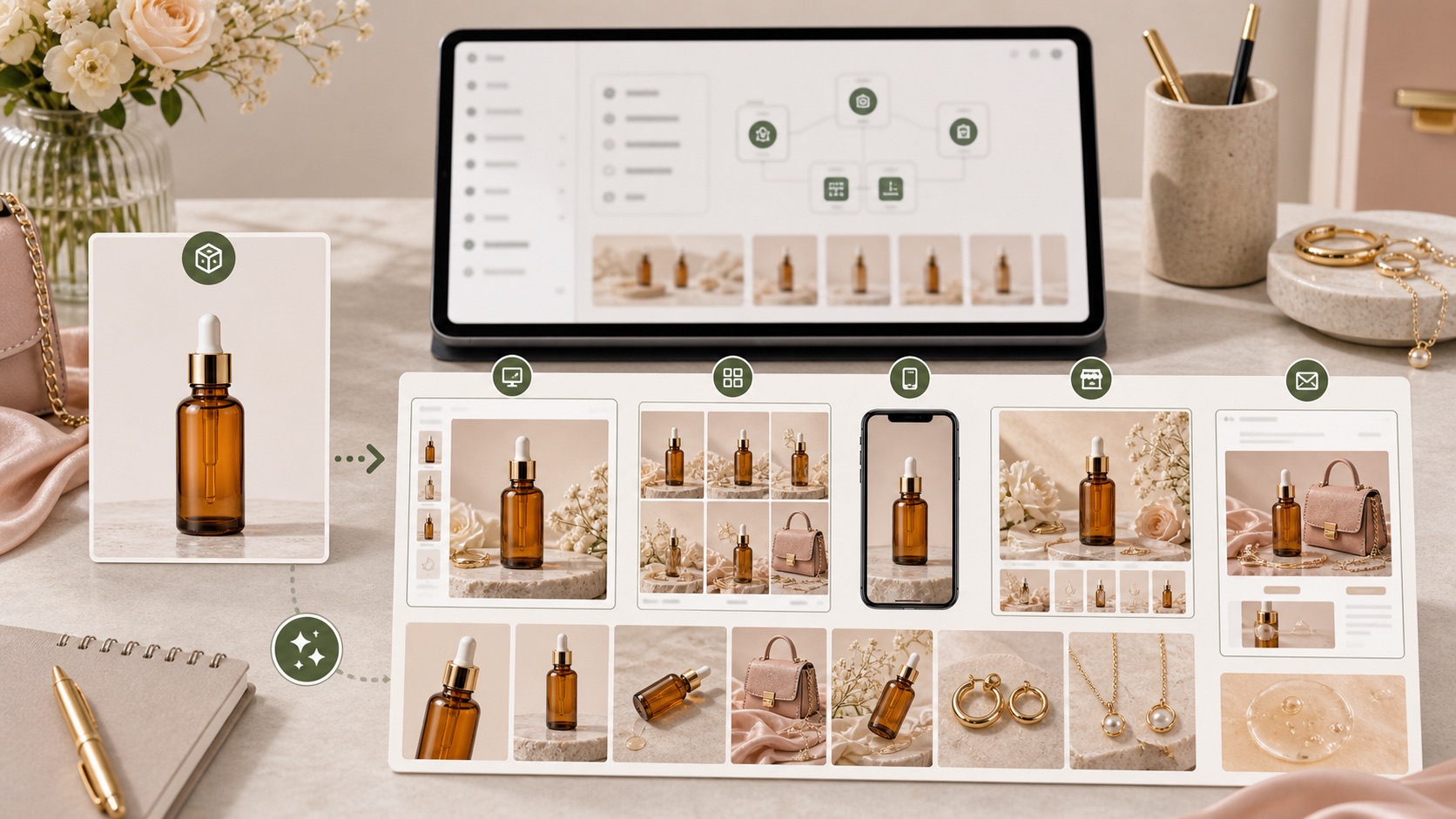
For Product Photography Trends 2026, the real challenge is not making one impressive image. Ecommerce teams need a repeatable way to create visuals that match the product, fit the channel, and help a buyer decide.
The image must make the product easier to understand, not create doubt about color, shape, material, logo, label, or scale.
Stores need more image variations for launches, collections, ads, marketplaces, and seasonal campaigns without turning every update into a full shoot.
A hero image, product gallery, social ad, marketplace crop, and mobile collection tile each need a different visual job.
Accuracy workflow
A strong Rewarx Studio AI workflow starts from the product reference, builds useful commercial contexts around it, and keeps accuracy review close to publication.
Use the reference as the source of truth for shape, proportions, visible branding, packaging, material, and important label areas.
Generate backgrounds, model scenes, detail views, and campaign visuals that explain use, quality, size, and buying intent.
Choose the best image only after checking product fidelity, crop, contrast, mobile readability, and whether the image helps the page convert.
Keep winning styles, prompts, crops, filenames, alt text, and review notes so future SKUs can be produced with less guesswork.
Where it fits
Use the visual set where it answers a buyer question, reduces production delay, or gives the team a stronger creative test without sacrificing product accuracy.
Show the item clearly, then add lifestyle and detail images that make quality, texture, size, and use easier to judge.
Create controlled variations for creative testing while keeping the SKU recognizable across every campaign.
Prepare cleaner crops, consistent backgrounds, and scannable images for small screens and external channels.
Workflow
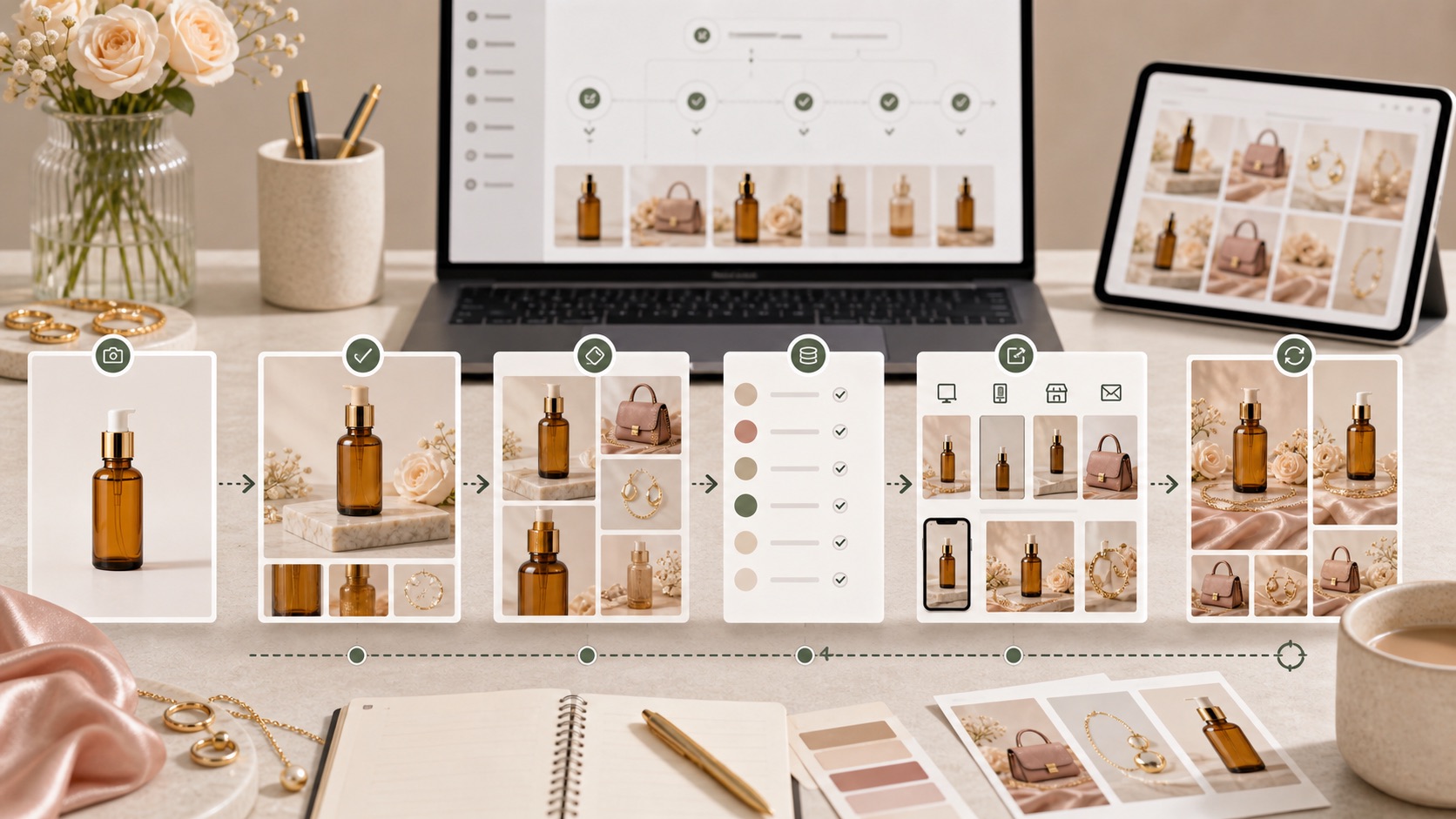
The workflow should turn one accurate product reference into many approved visual assets without creating chaos.
Use a clean product image that shows color, label zones, shape, material, and important details.
Choose whether the image must explain scale, lifestyle use, marketplace clarity, ad emotion, or AI-search meaning.
Create product page, marketplace, mobile, social, and ad variants from the same product identity.
Check logo, text, color, shape, packaging, material, and reflections before producing more versions.
Use SEO-friendly file names, alt text, image dimensions, and internal page context so the asset can be reused.
Use cases
The same product can need different visual roles across the commerce journey.


2026 signals
A strong product photography system balances beauty with information quality.
Comparison
| Planning | Shoot list and static crops | SKU-level visual system with channel roles | Reference-led workflow with reusable ecommerce image libraries |
|---|---|---|---|
| Search readiness | Keywords in page copy only | Images plus structured context for AI discovery | Alt text, file names, sections, FAQ, and page context aligned |
| Trust | Retouching optimized for polish | Accuracy optimized for confidence | Product accuracy review before publishing |
| Speed | New shoot for every campaign | Reusable product identity and fast scene generation | Generate, QA, compress, upload, and deploy in one workflow |

Best practices
A beautiful background is useful only if it helps the shopper understand the product or feel more confident.
The product should look like the same SKU across hero images, lifestyle scenes, ads, marketplace crops, and comparison graphics.
If the product cannot be understood on mobile in two seconds, the image is too subtle or too busy.
AI is strongest when it extends accurate references into more contexts, not when it invents a new product.
Definitions, comparisons, FAQ, process explanations, and clear image metadata make pages easier for AI systems to quote.
Avoid trend-chasing without product truth. Over-stylized AI scenes, fake materials, unreadable packaging, inconsistent scale, and missing context can damage trust even when the image looks premium.
FAQ
The biggest trend is the move from single images to product visual systems: accurate, reusable image libraries built for product pages, ads, marketplaces, AI search, and mobile shopping.
AI is not simply replacing photography. It is changing the production model by using real references, review workflows, and channel-specific image generation to reduce repeated shoots.
AI search and marketplaces can surface products quickly, but shoppers still return items when images misrepresent color, size, material, or packaging. Accuracy protects conversion and trust.
Use clear product views, descriptive alt text, SEO-friendly file names, consistent page context, structured FAQ, and visuals that show attributes shoppers may ask about.
Beauty, fashion, jewelry, supplements, accessories, home goods, and packaged consumer products benefit because they need many seasonal, channel-specific visual variations.
Generic AI images may look polished but fail to explain the real product. That weakens trust, reduces product recognition, and can make a page feel like a template.
Use enough images to explain the product: hero, detail, context, scale, comparison, mobile/social variants, and final conversion visuals. The right number depends on product complexity.
Rewarx Studio AI helps teams create product visuals from real references, review accuracy, prepare channel-specific assets, and build ecommerce image systems instead of one-off images.
Use Rewarx Studio AI to create, review, and reuse product visuals that stay accurate across product pages, campaigns, marketplaces, and AI search surfaces.
Build a 2026 image system