Visual drift
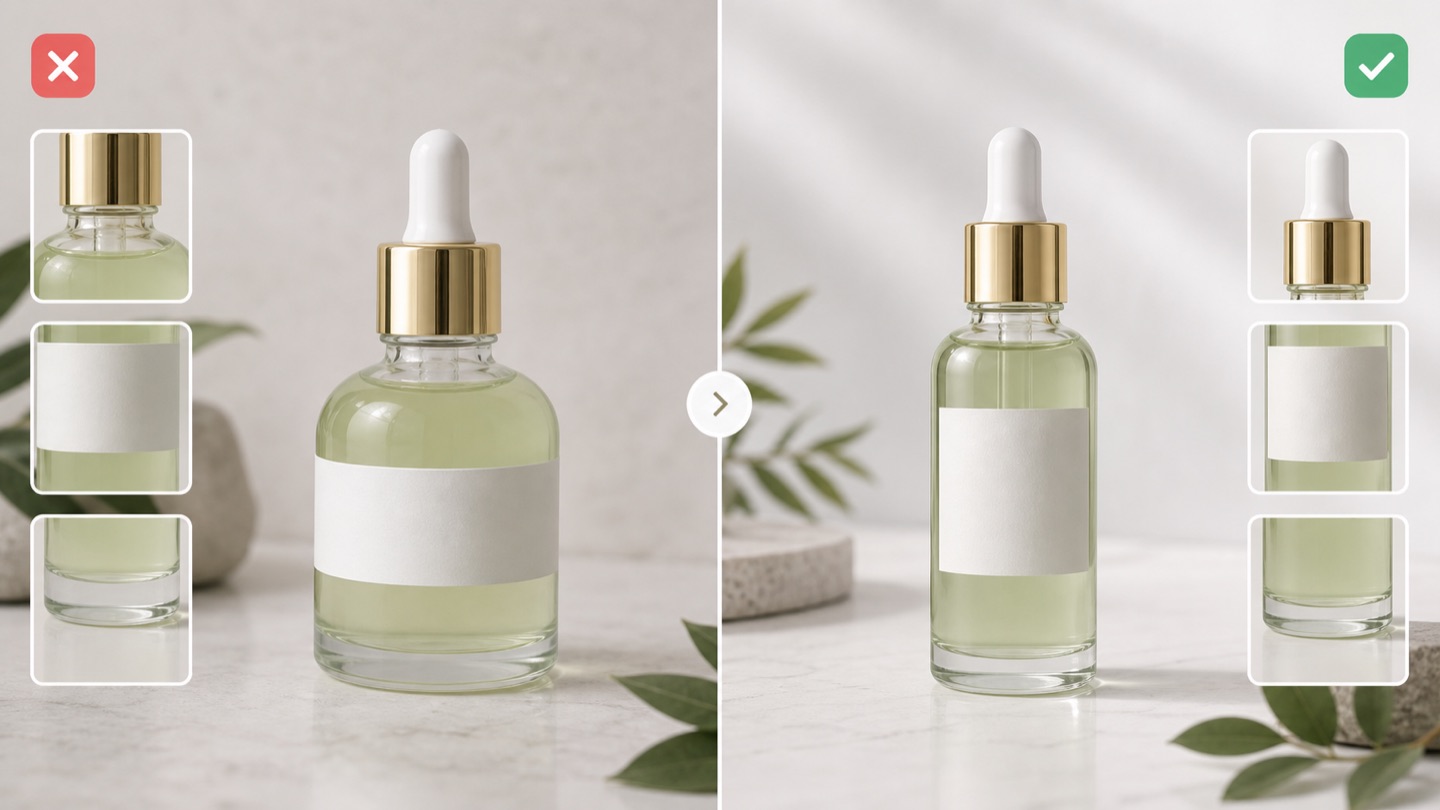
Logos, labels, colors, materials, bundles, and variant details can change subtly enough to pass a quick glance but still mislead a buyer.
Rewarx helps ecommerce teams turn AI-generated product visuals into channel-ready assets. Review product truth, variant match, crawlable URLs, metadata, mobile clarity, and buyer trust before images go live.

Marketplace image readiness
A marketplace image has to do more than look polished. It must show the real product, match the listing, survive small-screen cropping, avoid promotional overlays, remain crawlable, and preserve AI-generation metadata where required.
Logos, labels, colors, materials, bundles, and variant details can change subtly enough to pass a quick glance but still mislead a buyer.
A lifestyle image may work in a gallery while the main marketplace image needs a clear product view, stable crop, and minimal staging.
Unstable URLs, oversized files, missing metadata, and poor alt text can slow review, weaken SEO, or create unnecessary rework.

Rewarx Studio AI
Instead of asking only whether an AI image is beautiful, Rewarx frames the decision around whether the image is accurate, usable, discoverable, and safe for the channel where it will appear.
Shape, color, material, packaging, logo, label, and scale stay aligned with the real SKU.
Main image, additional views, lifestyle context, and ad crops each have a clear job.
Filenames, alt text, captions, structured image data, and AI-generation disclosure stay useful.
Images remain high quality without becoming too large, slow, or hard for crawlers to fetch.
Workflow
Use the same checks before publishing to Shopify, Google Shopping, Amazon, Etsy, paid social, or an AI-search-optimized landing page.
Use the real item as source of truth for shape, color, packaging, label zones, and distinguishing variant details.
Create a clean main image, supporting angles, lifestyle scenes, and campaign crops instead of forcing one image to do every job.
Check crop, background, overlays, file size, crawlability, metadata, and whether the image could be confused with another variant.
Keep stable URLs, descriptive metadata, image captions, review notes, and reusable decisions for the next SKU batch.
Use cases
The best AI image workflow does not stop at generation. It creates a cleaner route from product reference to product page, feed, ad, and AI answer.
Prepare clear product views, correct variants, crawlable URLs, and metadata-aware images before feed review.
Combine clean gallery assets with lifestyle images that explain size, use, texture, and product value.
Adapt crops, backgrounds, and supporting visuals without changing what the SKU actually is.
Give crawlers and AI systems visible, consistent product evidence that can be summarized and cited.
Score images before a batch goes live so mistakes do not spread across hundreds of listings.
Test backgrounds and scenes while protecting product accuracy, brand consistency, and buyer trust.
Comparison
| Source of truth | Real product reference, SKU details, and variant facts | Prompt-driven visuals that may invent or simplify details |
|---|---|---|
| Channel purpose | Main image, gallery, lifestyle, ad, and feed assets are reviewed separately | One attractive output is reused everywhere |
| Risk control | Checks for overlays, crop, metadata, crawlability, file size, and buyer confusion | Quality judged mostly by visual taste |
| Business outcome | More usable images with fewer review surprises | More generated images, but inconsistent publishability |
Best practices
FAQ
It means an AI product image is accurate enough, clear enough, crawlable enough, and channel-specific enough to support real ecommerce publishing rather than only looking impressive in a preview.
No. A clean main product image is often safest for listings, while lifestyle images can be valuable as additional views, product-page assets, or ad creatives when they still show the product honestly.
Check whether the image still matches the real SKU: color, shape, material, label, logo, packaging, bundle contents, and variant details. If that fails, the image is not ready.
AI systems can cite and summarize pages more confidently when product visuals, captions, structured data, page copy, and internal links all describe the same product truth.
No. Rewarx helps teams prepare and review images, but sellers should still follow each marketplace, ad platform, and feed policy before publishing.
Metadata, filenames, alt text, captions, and structured image fields help search systems understand image ownership, context, licensing, AI origin, and relationship to the page.
Start with the highest-traffic SKUs, fix the main image and gallery sequence first, then apply the same review checklist to new SKU batches.
Use Rewarx to create, review, and prepare product images that stay accurate, useful, and channel-ready.
Start with Rewarx