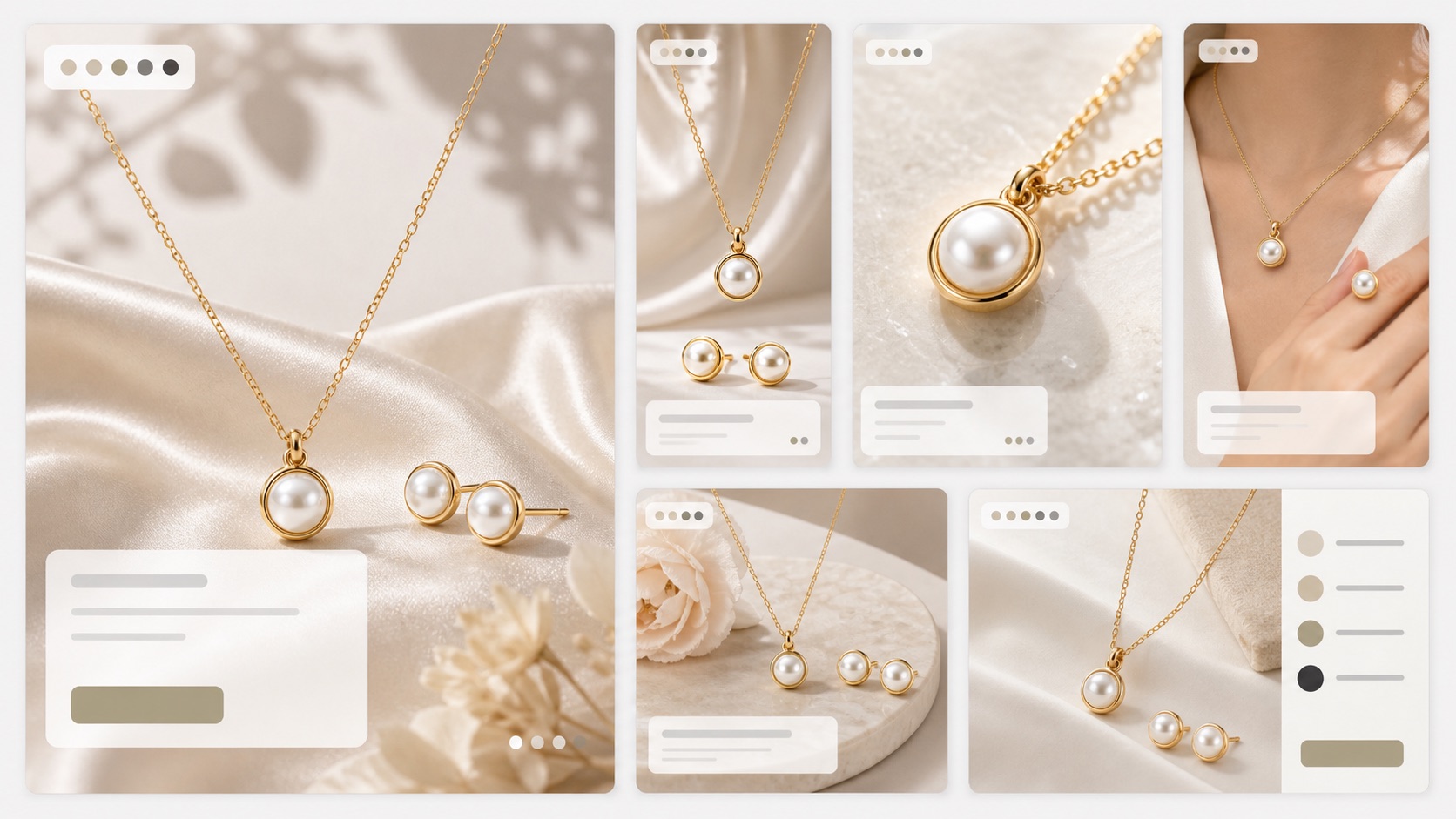
Buyer trust
The image must make the product easier to understand, not create doubt about color, shape, material, logo, label, or scale.
Choose AI product photography software by whether it creates usable ecommerce images, not just impressive renders. The right workflow keeps the real SKU recognizable while preparing visuals for Shopify, marketplaces, ads, mobile galleries, SEO, GEO, and AI Search.

Why this matters
Most AI image tools can create attractive visuals, but ecommerce teams need more than attractive. Labels must stay readable, logos must remain accurate, colors and materials must match, crops must work on mobile, and every output should help shoppers decide without misleading them.

Decision context
For Best AI Product Photography Tools 2026, the real challenge is not making one impressive image. Ecommerce teams need a repeatable way to create visuals that match the product, fit the channel, and help a buyer decide.
The image must make the product easier to understand, not create doubt about color, shape, material, logo, label, or scale.
Stores need more image variations for launches, collections, ads, marketplaces, and seasonal campaigns without turning every update into a full shoot.
A hero image, product gallery, social ad, marketplace crop, and mobile collection tile each need a different visual job.
Nauwkeurigheidsworkflow
A strong Rewarx Studio AI workflow starts from the product reference, builds useful commercial contexts around it, and keeps accuracy review close to publication.
Use the reference as the source of truth for shape, proportions, visible branding, packaging, material, and important label areas.
Generate backgrounds, model scenes, detail views, and campaign visuals that explain use, quality, size, and buying intent.
Choose the best image only after checking product fidelity, crop, contrast, mobile readability, and whether the image helps the page convert.
Keep winning styles, prompts, crops, filenames, alt text, and review notes so future SKUs can be produced with less guesswork.
Where it fits
Use the visual set where it answers a buyer question, reduces production delay, or gives the team a stronger creative test without sacrificing product accuracy.
Show the item clearly, then add lifestyle and detail images that make quality, texture, size, and use easier to judge.
Create controlled variations for creative testing while keeping the SKU recognizable across every campaign.
Prepare cleaner crops, consistent backgrounds, and scannable images for small screens and external channels.
Before vs after
Generic AI outputs may look polished but can change product shape, color, label detail, scale, or marketplace fit.
A controlled Rewarx workflow produces a cleaner gallery, stronger first impression, clearer mobile scan, and fewer risky AI artifacts.
They are tools that use AI to create, edit, enhance, or stage product images for ecommerce. A serious tool must protect the real product while improving presentation.
Product accuracy, usable output rate, channel fit, review controls, mobile clarity, metadata readiness, and the ability to support conversion are more important than visual novelty alone.
Rewarx focuses on ecommerce product visuals. It treats the product reference, accuracy review, channel use, compression, filenames, alt text, captions, and buyer usefulness as part of the workflow.
They can reduce many repeat shoots and create faster variants, but teams should still review outputs against the real SKU, especially for labels, logos, color, materials, and regulated product claims.
Shopify brands, DTC teams, marketplace sellers, fashion stores, beauty brands, jewelry sellers, supplement brands, and teams that need many product visuals without losing consistency.
Measure approved usable images, product accuracy, mobile clarity, speed to publish, file performance, image metadata quality, and whether the visuals improve buyer confidence.
Rewarx Studio AI is built around product accuracy and ecommerce readiness: start with a real product reference, generate controlled product visuals, review quality before publishing, prepare metadata-ready assets, and reuse approved images across product pages, ads, comparison pages, and AI-search-friendly landing pages.